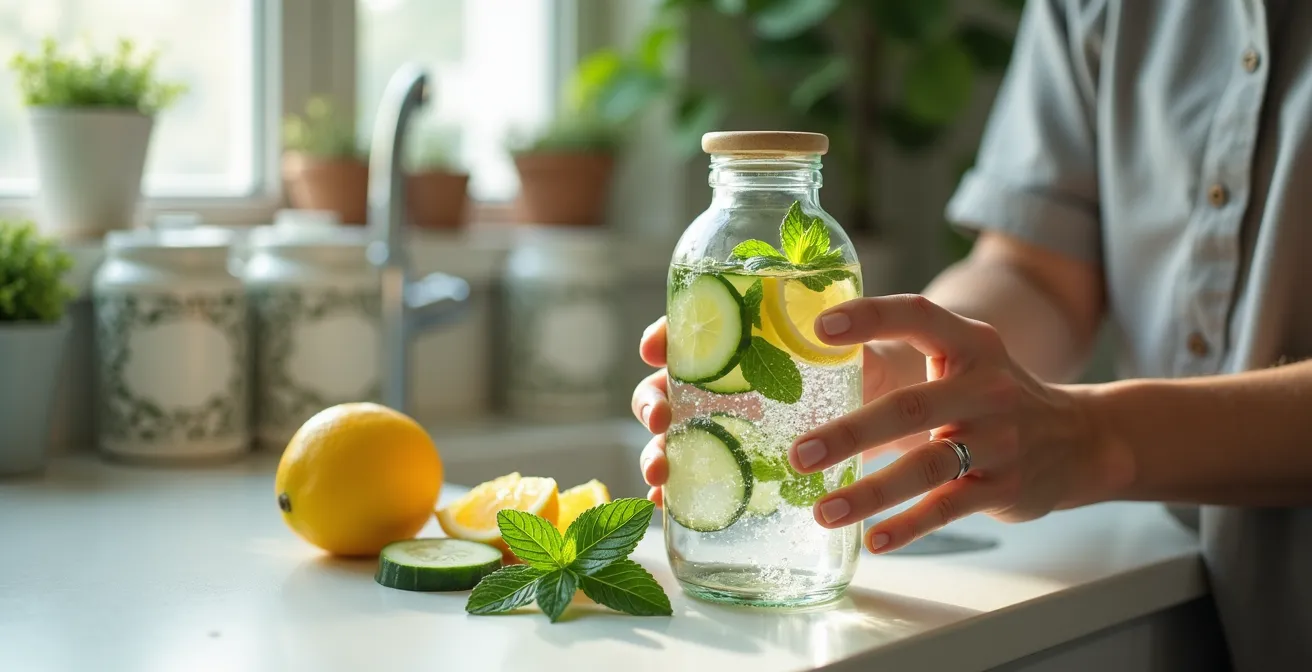
The key to accelerating nicotine withdrawal isn’t just drinking more water, but transforming water into a strategic tool for metabolic support and psychological rewiring.
- Effective detox relies on “strategic hydration” with electrolytes, not just plain water, to support your body’s natural processes.
- Replacing the smoking ritual with a new hydration ritual (using props like straws or special bottles) is crucial for overcoming the psychological addiction.
Recommendation: Shift your focus from “flushing out” nicotine to actively supporting your body’s recovery and building a new, healthy non-smoker identity with every glass you drink.
When the fierce decision to quit smoking is made, the first impulse for many is to “flush out” the years of accumulated toxins as quickly as possible. The idea of drinking gallons of water to wash away nicotine is a powerful and intuitive one. It feels proactive, a way to physically purge the addiction from your system. This common advice, while well-intentioned, often oversimplifies a complex biological and psychological process. The body’s detoxification system is far more sophisticated than a simple plumbing network.
While hydration is undeniably a cornerstone of this journey, the real power doesn’t lie in the sheer volume of liquid you consume. It’s about strategic hydration. What if the secret wasn’t just *how much* you drink, but *what* you drink, *when* you drink it, and *how* you drink it? The transition from smoker to non-smoker is not just a chemical battle; it’s a profound shift in habits, rituals, and identity. True success comes from understanding that a glass of water can be more than just hydration—it can be a metabolic booster, a craving-crusher, and a tool for rebuilding your life, one sip at a time.
This guide moves beyond the platitude of “drink more water.” We will explore how to make every drop count by supporting your body’s natural detox pathways. We will dissect the role of temperature, flavor, and even the containers you use to transform a simple act of drinking into a powerful ritual of recovery. Get ready to learn how to truly harness the power of hydration to not just survive withdrawal, but to thrive through it.
To navigate this in-depth exploration, the following sections will break down each critical aspect of strategic hydration for nicotine withdrawal. You’ll find practical advice and the science behind why these methods work, guiding you step-by-step towards a new, healthier identity.
Summary: The Water Flush: Can Hydration Speed Up Nicotine Withdrawal?
- How to Flush Nicotine Out of Your System in 48 Hours?
- Why You Feel Tired All Day Despite Sleeping 8 Hours?
- The Error of Drinking Distilled Water During Detox
- Ice Water vs Warm Tea: Which Calms the Stomach Best?
- Cucumber and Mint: Flavoring Water to Replace Taste Boredom
- Using a Straw to Mimic the Drag of a Cigarette
- The Bottle as a Prop: Keeping Hands Busy in Social Settings
- The Non-Smoker Identity: How to Stop Thinking Like an Ex-Smoker?
How to Flush Nicotine Out of Your System in 48 Hours?
The urgent question “How can I get this out of my body NOW?” is a common and understandable plea during the first difficult days of quitting. While the idea of a complete 48-hour “flush” is a myth, you can absolutely take powerful steps to support and accelerate your body’s natural detoxification process. The key is to understand what you’re up against. Your body metabolizes nicotine relatively quickly, but it’s the byproduct, cotinine, that lingers. In fact, medical research shows that cotinine can remain detectable for up to 10 days in the blood, which is what most tests look for. Therefore, your goal isn’t a magical flush, but providing your liver and kidneys—your body’s detox powerhouses—with everything they need to work efficiently.
Supporting your system starts with hydration, but it goes much further. You need to focus on a holistic approach that includes nutrition to support liver enzymes, light exercise to boost metabolism, and adequate rest for cellular repair. Think of it less like pressure washing your system and more like providing high-grade fuel and maintenance to a high-performance engine. A 48-hour protocol is about creating the optimal environment for your body to do what it’s designed to do: heal itself.
Your 48-Hour Detox Support Protocol
- Strategic Hydration: Drink at least eight glasses of water per day, but enhance it with electrolytes (a pinch of sea salt, a squeeze of lemon) to aid cellular function.
- Liver-Boosting Foods: Incorporate broccoli, grapefruit, and other cruciferous vegetables. They help support the CYP2A6 enzyme, which is crucial for breaking down nicotine.
- Metabolic Movement: Engage in 30 minutes of brisk walking or other moderate exercise. This boosts circulation and promotes the removal of waste products through sweat and respiration.
- Herbal Allies: Sip on green tea, which contains EGCG, and consider milk thistle supplements (after consulting a doctor) to provide additional support for liver health.
- Prioritize Sleep: Aim for a consistent 8 hours of sleep. This is when your body undergoes its most critical repair and regeneration processes.
By following this supportive protocol, you’re not just waiting for the nicotine to leave; you’re actively participating in your recovery. You are sending a clear signal to your body that it’s time to rebuild and rejuvenate, setting a strong foundation for the days and weeks to come.
Why You Feel Tired All Day Despite Sleeping 8 Hours?
One of the most frustrating and paradoxical symptoms of nicotine withdrawal is profound fatigue. You might be getting your recommended eight hours of sleep, yet you feel drained, foggy, and unmotivated. This exhaustion isn’t just in your head; it’s a physiological response to your body recalibrating itself after years of stimulant use. Nicotine acts as a stimulant, artificially boosting alertness and dopamine levels. When you remove it, your body experiences a “crash” as it learns to produce energy and regulate mood on its own again. This period of adjustment is intense, and the fatigue is very real.
Furthermore, this exhaustion is often exacerbated by a hidden culprit: dehydration. During withdrawal, it’s common to increase caffeine intake to fight tiredness. However, caffeine is a diuretic, causing you to lose fluids. This, combined with the low-grade anxiety that often accompanies quitting, can lead to a state of mild but chronic dehydration. Dehydration is a primary cause of tiredness, headaches, and brain fog, compounding the already challenging symptoms of withdrawal. The fatigue you feel is a sign that your body is working incredibly hard to find a new equilibrium.
This intense phase has a timeline. A study published in PubMed found that nicotine withdrawal symptoms typically peak around the third day and gradually taper off over the next three to four weeks. Knowing this can provide a light at the end of the tunnel. Your energy will return, and often, it will be a more stable, natural energy than what you experienced as a smoker. The key is to support your body through this recalibration period with proper rest and, most importantly, strategic hydration to combat the fatigue at its source.
The case study on the connection between dehydration and withdrawal fatigue is insightful. Former smokers often don’t realize that their increased anxiety and caffeine consumption create a perfect storm for dehydration. A disciplined hydration schedule—drinking plenty of water throughout the day but tapering off two hours before bed—can dramatically improve both energy levels and sleep quality, helping to break the vicious cycle of being tired all the time.
The Error of Drinking Distilled Water During Detox
In the quest for purity, some people turn to distilled water, believing it’s the “cleanest” option to flush their system. This is a critical mistake. Distilled water is water that has been stripped of all its minerals and electrolytes. While it’s excellent for steam irons, it’s detrimental during a detox. When you drink it, it can actually pull essential minerals—like sodium, potassium, and magnesium—out of your body to achieve equilibrium. During nicotine withdrawal, your body is already under immense stress, and depleting your electrolytes will only make symptoms like headaches, anxiety, and muscle cramps significantly worse.
The right approach is not to seek “empty” water, but to drink water that is rich in the very minerals your nervous system needs to stabilize. This is the essence of strategic hydration. You want to replenish, not deplete. Think of electrolytes as the spark plugs for your cells. They are responsible for nerve signals, muscle contractions, and maintaining proper fluid balance. Nicotine withdrawal throws this delicate system into disarray, and providing a steady supply of electrolytes is one of the most effective ways to soothe your agitated nervous system and reduce the physical misery of quitting.
Instead of distilled water, opt for spring water, filtered tap water, or “enhanced” water that you make yourself. A simple squeeze of lemon or lime, a pinch of high-quality sea salt, or a splash of coconut water can turn a plain glass of water into a powerful, stabilizing elixir. These additions provide the natural electrolytes your body is craving and help to mitigate some of the most challenging physical withdrawal symptoms.
This table highlights how crucial electrolytes are and why avoiding distilled water is paramount for a smoother detox journey. As the data on electrolyte function shows, these minerals are not optional extras; they are fundamental to managing withdrawal.
| Electrolyte | Deficiency Symptom | Withdrawal Connection | Natural Source |
|---|---|---|---|
| Sodium | Headaches, confusion | Worsens withdrawal headaches | Pinch of sea salt |
| Magnesium | Muscle cramps, tremors | Increases jitters and anxiety | Dark leafy greens |
| Potassium | Heart palpitations | Amplifies withdrawal anxiety | Lemon/lime squeeze |
| Calcium | Muscle spasms | Contributes to restlessness | Coconut water |
Ice Water vs Warm Tea: Which Calms the Stomach Best?
During nicotine withdrawal, your entire system, including your digestive tract, is in upheaval. This can manifest as nausea, cramping, or a general sense of unease in your stomach. The temperature of what you drink can have a surprisingly powerful and immediate effect on these symptoms. The choice between a glass of ice water and a cup of warm herbal tea isn’t just about preference; it’s about deploying a specific tool for a specific problem. Each has a distinct physiological effect that can be harnessed to your advantage.
Ice water acts as a sensory shock. The cold jolt can be incredibly effective at cutting through morning brain fog or a sudden wave of fatigue. It provides a quick, sharp sensation that can reset your focus and provide a burst of alertness. However, for some, this same jolt can be jarring to an already sensitive stomach and may not be the best choice during moments of high anxiety or before bed. It is best used as a midday pick-me-up or a way to snap out of a craving.
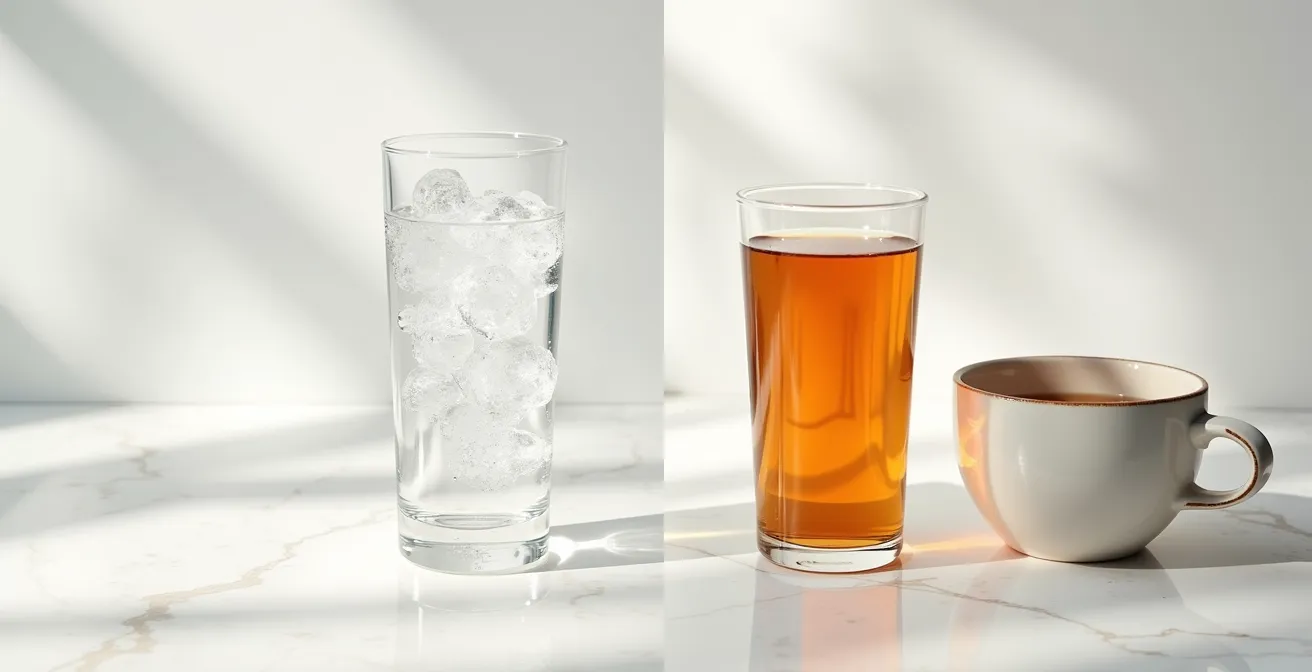
Warm tea, on the other hand, offers a soothing, relaxing effect. The warmth helps to relax the muscles of the gastrointestinal tract, easing cramps and nausea. Certain herbs have additional benefits: peppermint and ginger are renowned for their stomach-calming properties, while chamomile and valerian root are excellent for easing evening anxiety and promoting sleep. A warm cup of tea can become a comforting evening ritual, signaling to your body and mind that it’s time to wind down. This is your go-to for digestive distress and nervous tension.
This table, based on an analysis of natural relief strategies, provides a clear guide for when to reach for cold versus warm beverages to manage specific withdrawal symptoms effectively.
| Symptom | Ice Water | Warm Tea | Best Time |
|---|---|---|---|
| Morning Brain Fog | ✓ Sensory shock helps alertness | Less effective | Morning/Midday |
| Evening Anxiety | May be jarring | ✓ Chamomile calms nervous system | Evening |
| Stomach Issues | Can trigger vagus nerve response | ✓ Peppermint/ginger relaxes GI muscles | After meals |
| Insomnia | Avoid before bed | ✓ Valerian root promotes sleep | 1-2 hours before bed |
| Fatigue | ✓ Quick energy boost | ✓ Licorice root for adrenal support | Varies by preference |
Cucumber and Mint: Flavoring Water to Replace Taste Boredom
One of the unexpected challenges of quitting is “taste boredom.” For years, the harsh, distinct taste of smoke has dominated your palate. In its absence, everything can feel bland, including plain water. This can make the vital task of staying hydrated feel like a chore, leading you back to sugary drinks or, worse, making you feel like something is “missing.” This is where flavored water infusions become a game-changer. They provide sensory engagement and help retrain your taste buds to appreciate subtle, natural flavors.
As you quit, something magical happens. According to the CDC, former smokers report that food becomes more enjoyable because their senses of smell and taste are no longer dulled by smoke. Infusing water with ingredients like cucumber and mint is not just about making water less boring; it’s about celebrating this newfound sensory awakening. The crispness of cucumber and the cool tingle of mint provide a refreshing, clean sensation that actively combats the lingering “ashtray” taste in your mouth and helps reset your palate. It’s a way to introduce novelty and pleasure into your hydration routine.
The ritual of preparing the infused water itself is also a form of therapy. The five minutes you spend washing and slicing a cucumber or picking mint leaves can serve as a mindful replacement for a cigarette break. It’s a constructive, self-caring action that engages your hands and mind, breaking the old, destructive pattern. You can even tailor your infusions to target specific withdrawal symptoms, turning your water bottle into a personalized apothecary.
Your Checklist for Symptom-Specific Water Infusions
- For Irritability: Have you tried infusing your water with lavender and chamomile to promote a sense of calm?
- For Fatigue: Have you added slices of lemon and orange, along with a sprig of rosemary, to your water for a natural energy boost?
- For Cravings: Have you used a cinnamon stick and thin apple slices to satisfy your desire for sweetness without resorting to sugar?
- For Brain Fog: Is your go-to infusion a combination of fresh mint and cucumber for its clarifying and refreshing effects?
- For Ritual Replacement: Have you dedicated five minutes to mindfully chopping and preparing your infusion ingredients as a replacement for your former smoke break?
Using a Straw to Mimic the Drag of a Cigarette
The addiction to nicotine is twofold: it’s chemical and it’s psychological. The psychological component is deeply rooted in physical habits, chief among them being the “oral fixation”—the hand-to-mouth motion, the pursing of the lips, and the sensation of the “drag.” Even when the chemical craving subsides, this ritualistic need can trigger intense urges. This is where a simple straw can become one of your most powerful and discreet allies. Drinking your water through a straw directly mimics the physical mechanics of smoking.
The act of sipping through a straw engages the same facial muscles and provides a similar oral sensation to taking a puff. It gives your mouth something to do and satisfies that deep-seated muscle memory. The resistance you feel when you draw liquid through a narrow straw can be surprisingly similar to the “drag” of a cigarette, providing a safe and healthy outlet for that specific physical craving. It’s a classic example of ritual replacement, where you substitute a harmful habit with a beneficial one without completely disrupting the ingrained physical pattern.
You can even customize the experience to better suit your needs. A narrow, firm straw (like one made of metal) will provide a tighter, more resistant “drag,” which can be more satisfying during intense cravings. A wider, more flexible silicone straw can offer a gentler sensation and also cater to the need to bite or chew. The key is to have them readily available—in your car, at your desk, by your couch—so that when the urge for that physical sensation strikes, you can immediately reach for your water and straw instead of a cigarette. This simple tool helps bridge the gap between the old habit and the new, healthier you.
Your Guide to Choosing the Right Straw
- For a Tight ‘Drag’ Sensation: Use narrow metal or hard plastic straws to closely mimic the resistance of a cigarette.
- For a Gentler, Comfortable Feel: Choose wider silicone straws that are softer on the mouth and offer a smoother flow.
- For a Biting or Chewing Fixation: Select high-quality, chewable silicone straws that can satisfy two oral habits at once.
- For Constant Availability: Keep a variety of straws in multiple locations (car, office, home) to ensure you always have access when a craving hits.
- For Enhanced Sensory Replacement: Pair your straw-sipping with flavored or iced water to create a multi-sensory experience that further distracts from smoking.
The Bottle as a Prop: Keeping Hands Busy in Social Settings
Quitting smoking isn’t just a personal battle; it’s a social one. Social gatherings, work breaks, and evenings out with friends—situations previously punctuated by cigarettes—can become minefields of triggers and awkwardness. What do you do with your hands? How do you decline the offer of a cigarette without feeling left out? A high-quality, reusable water bottle can serve as an incredibly effective social prop, giving your hands a job and providing a non-verbal statement about your new identity.
Holding a bottle gives you a physical anchor in social situations. It occupies the hand that used to hold a cigarette, satisfying the need to be holding something. The simple acts of unscrewing the cap, taking a sip, and screwing it back on can fill the small, awkward pauses in conversation where you might have previously lit up. It provides a buffer, a reason to pause and collect your thoughts before speaking, and a clear signal to others that you are already “busy” and don’t need or want a cigarette. This simple prop allows you to remain part of the group, rather than having to physically leave to avoid temptation.
As the HealthVape Research Team notes in their “Best Oral Fixation Smoking Alternatives Guide”:
The bottle is not just for busy hands; it’s a tool to manage social pressure. It provides a reason to pause before speaking, a buffer in conversations, and a non-verbal cue that you are occupied and don’t need a cigarette.
– HealthVape Research Team, Best Oral Fixation Smoking Alternatives Guide
Furthermore, the type of bottle you choose can become a statement. A well-designed, high-quality bottle can be a conversation starter and a public declaration of your commitment to a healthier lifestyle. It’s a tangible symbol of your new identity. As former smokers report, this allows them to stay present in social settings, facilitating the crucial psychological shift from “ex-smoker” (someone who is deprived) to “non-smoker” (someone for whom smoking is irrelevant).
Key Takeaways
- True detox is not about “flushing” with plain water but “strategic hydration” with electrolytes to support your body’s metabolism.
- The temperature and flavor of your water can be used as tools to manage specific withdrawal symptoms like fatigue, anxiety, and taste boredom.
- Overcoming the psychological addiction requires “ritual replacement”—using props like straws and water bottles to mimic the physical habits of smoking in a healthy way.
The Non-Smoker Identity: How to Stop Thinking Like an Ex-Smoker?
The ultimate goal of quitting is not just to stop an activity, but to change who you are. The distinction between an “ex-smoker” and a “non-smoker” is profound. An ex-smoker is someone who is constantly resisting the urge to smoke. A non-smoker is someone for whom smoking is simply not a part of their life. This identity shift is the final, and most important, step in the journey. This is where every conscious choice, especially the simple act of drinking water, becomes a powerful tool for transformation.
As author James Clear famously stated in “Atomic Habits,” every action you take is a vote for the type of person you wish to become. When you reframe your thinking in this way, every glass of water is no longer just a way to manage a craving; it is a vote for your new, healthy, non-smoker identity. The question you ask yourself shifts from “How do I resist this craving?” to “What would a healthy person do right now?” The answer, almost always, is to take a sip of water, go for a walk, or take a deep breath—not to smoke.
The question is not ‘How do I stop smoking?’ but ‘What would a healthy person do?’ Every glass of water becomes a ‘vote’ for the new healthy non-smoker identity.
– James Clear, Atomic Habits (referenced in withdrawal management literature)
This mental shift turns hydration from a passive activity into an active declaration. Your morning glass of water is your first non-smoker action of the day. Filling your water bottle becomes your new “break” ritual. Carrying a premium water bottle is a visible symbol of your commitment. You start counting glasses of water consumed instead of cigarettes avoided. By consistently making these small, positive choices, you are casting hundreds of votes for your new identity. Over time, these votes accumulate, and the identity of a “non-smoker” ceases to be an aspiration and becomes your reality.
Begin your journey to a smoke-free life today. Start by turning every glass of water into a deliberate, powerful step towards your new identity.