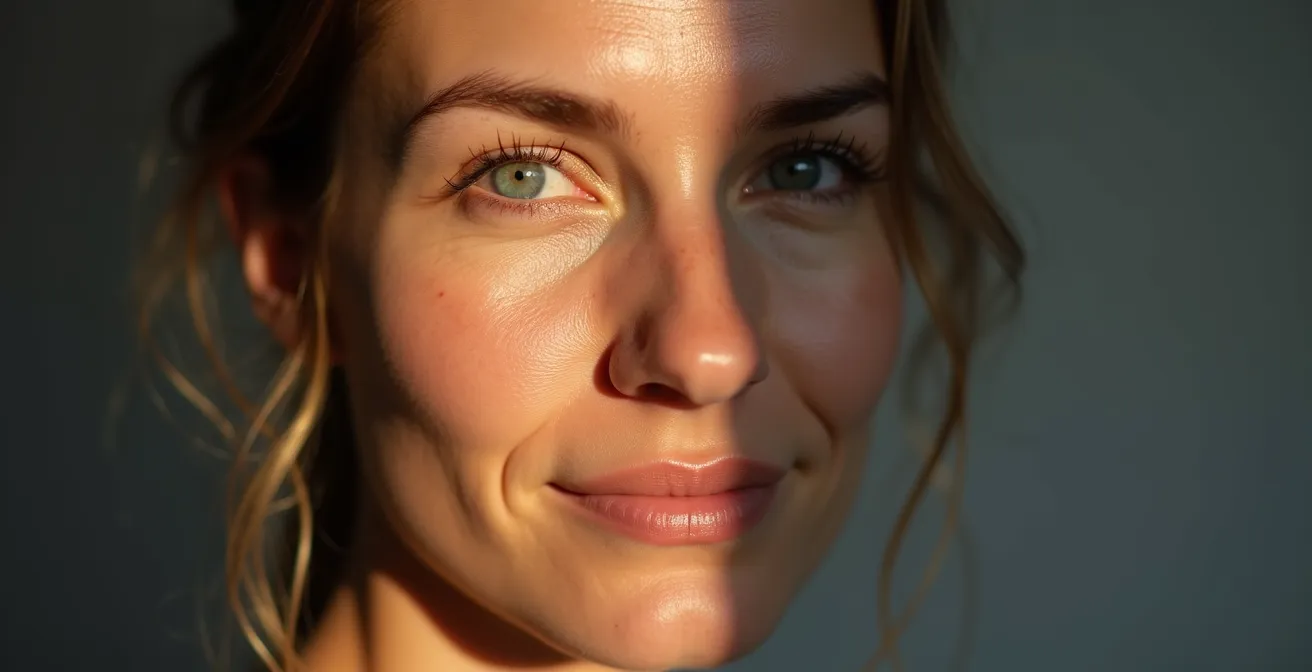
Quitting smoking initiates a deep cellular reconstruction, with visible aesthetic improvements following a predictable, science-backed biological timeline.
- Initial improvements, like skin tone, are driven by rapid oxygenation within hours of your last cigarette.
- Deeper structural repairs, including significant collagen synthesis and hair follicle revitalization, begin around 4-8 weeks and continue for months.
Recommendation: Aligning your expectations with this biological reality and actively supporting the process is the most effective strategy for reversing the aesthetic damage of smoking.
There’s a moment many smokers, or recent ex-smokers, experience. It’s a candid glance in the mirror under harsh lighting, where the reflection doesn’t quite match the person you feel you are. You see a certain dullness, a greyish undertone to the skin, and fine lines around the mouth and eyes that seem prematurely etched. This is the quiet arrival of “smoker’s face.” While the primary motivations for quitting are rightly focused on long-term health, this aesthetic concern is a powerful, and perfectly valid, catalyst for change for many in their 40s and beyond.
The common advice is to reach for expensive vitamin C serums and heavy moisturizers. While helpful, these are surface-level treatments for a systemic problem. The damage from smoking is woven deep into your biology, constricting blood vessels, poisoning your cells with carbon monoxide, and actively shutting down the very factories that produce youthful collagen. The real, lasting reversal of this damage doesn’t come from a jar.
But here is the profoundly hopeful, scientific truth: the moment you quit, you trigger a process of deep cellular reconstruction. The key to navigating this journey isn’t just wishful thinking; it’s understanding the biological timeline of your body’s own incredible repair mechanisms. It’s about swapping vague hope for a concrete, science-backed roadmap. This isn’t about simply looking better; it’s about witnessing the physical proof of your body healing from the inside out.
This article provides that roadmap. We will explore the chronobiology of your aesthetic recovery, detailing the specific, tangible changes you can expect—from the rapid return of your natural skin tone to the methodical rebuilding of collagen, the revitalization of your hair, and even the recovery of your voice. Understanding this timeline empowers you to manage your expectations and actively support your body’s return to health and vibrancy.
Contents: A Timeline for Aesthetic Recovery
- The “Grey Cast”: How Oxygen Return Changes Your Skin Tone?
- Whitening Your Teeth: When Is It Safe After Quitting?
- Hair Thinning: Does Quitting Stop Nicotine-Induced Hair Loss?
- The Mistake of Thinking “Smoker’s Voice” Is Permanent
- Surgery Prep: Why Surgeons Demand You Quit 6 Weeks Prior?
- 3 Physical Signs Your Oxygen Levels Are Finally Normalizing
- Switching to a Brand You Hate 2 Weeks Before Quitting
- Rewiring the Brain: Using CBT to Dismantle the “Just One” Lie
The “Grey Cast”: How Oxygen Return Changes Your Skin Tone?
One of the most immediate and encouraging aesthetic payoffs of quitting is the swift departure of the “smoker’s grey.” This dull, sallow complexion isn’t just a sign of fatigue; it’s a direct result of two factors: chronic vasoconstriction and carbon monoxide poisoning. Nicotine causes the tiny blood vessels in your skin to clamp down, dramatically reducing blood flow. Simultaneously, the carbon monoxide from smoke binds to your red blood cells, displacing the oxygen they’re meant to carry. The result is skin literally starved of oxygen and life-giving nutrients.
The reversal of this state is remarkably fast. Without a constant supply of nicotine, your blood vessels begin to relax and dilate, a process known as vascular normalization. This allows blood to flow freely back into the delicate capillary networks of your face. Research shows that visible changes can occur rapidly; in fact, color can return to the face within 24 hours as circulation improves. This isn’t a placebo effect; it’s the physical result of freshly oxygenated hemoglobin-rich blood re-perfusing your skin tissue.
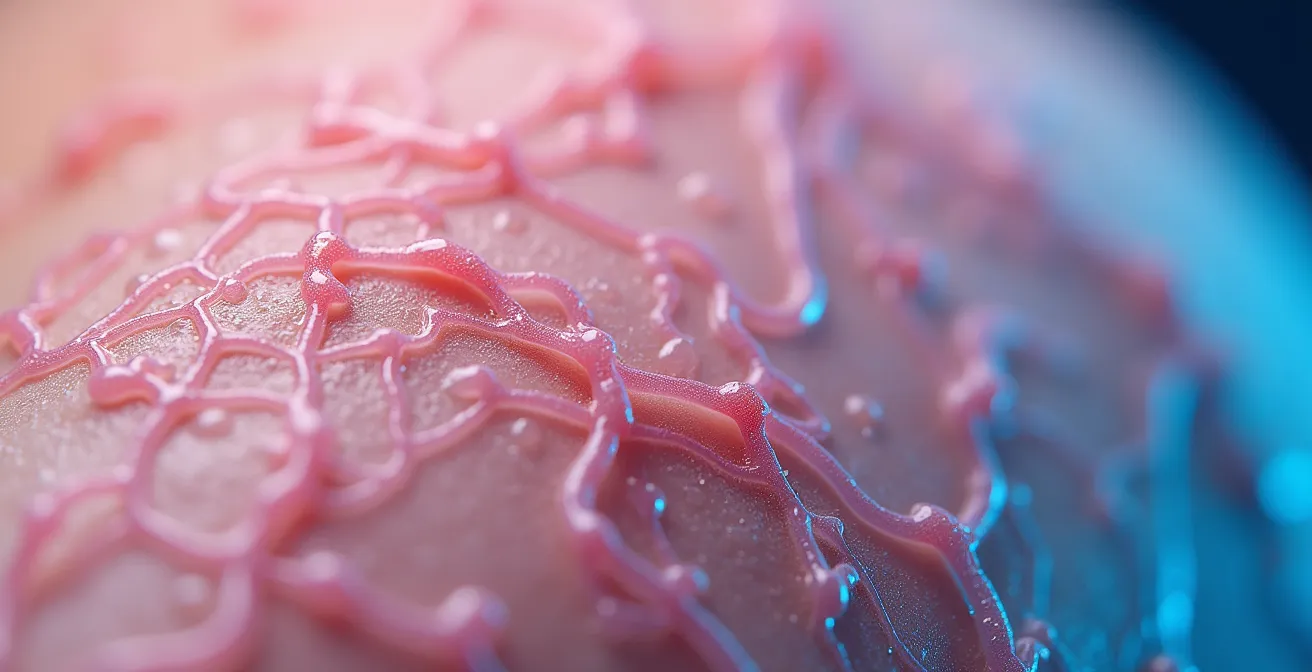
As this macro image of healthy skin suggests, a dense network of capillaries is essential for a vibrant complexion. When this network is fully open and functional, your skin regains its natural pink and radiant undertones. This rapid transformation is a powerful first piece of evidence that your body has already begun its deep cellular reconstruction. It’s the first visible dividend from your decision to quit, proving that positive change is not only possible but already underway.
This initial glow is just the beginning. It’s the surface-level sign of the much deeper systemic repairs that are kicking into gear, setting the stage for more profound structural improvements in the weeks and months to come.
Whitening Your Teeth: When Is It Safe After Quitting?
After the grey cast on your skin begins to fade, your attention might turn to another tell-tale sign of smoking: stained teeth. The tar and nicotine in tobacco smoke create stubborn yellow and brown stains that even diligent brushing can’t erase. While the desire to immediately book a professional whitening session is understandable, from a dental health perspective, a strategic pause is not just recommended—it’s essential for both safety and effectiveness.
The primary reason for waiting is the health of your gums. Smoking impairs blood flow to the gums, masking the signs of gum disease (periodontitis) and slowing their ability to heal. After you quit, your gums begin a crucial recovery process. Undergoing an intensive whitening treatment during this sensitive phase can cause unnecessary irritation and sensitivity. Most dentists advise waiting at least a few months to allow your gums to heal and stabilize before considering cosmetic procedures. Furthermore, immediately after a whitening treatment, your tooth enamel becomes temporarily more porous. If you were to have a relapse and smoke during this window, typically the first 48 hours, your teeth would absorb the new stains even more readily, completely undoing the procedure.
Instead of rushing, adopt a phased approach to restoring your smile. This is an active part of your body’s reconstruction project. Your plan should include:
- Schedule a dental check-up and deep cleaning. This is your first step. It removes surface plaque and tartar, allows your dentist to assess your gum health, and establishes a baseline.
- Practice impeccable oral hygiene. This includes daily brushing and flossing, and consider rinsing with water after meals to minimize new stains from coffee or tea.
- Discuss professional whitening options. After a few months, once your dentist confirms your gums are healthy, you can safely proceed with professional treatments that can effectively remove the deep-set stains.
Treating your oral health as part of your overall recovery ensures that when you do whiten your teeth, the results are not only beautiful but also built on a foundation of genuine health.
Hair Thinning: Does Quitting Stop Nicotine-Induced Hair Loss?
While often less discussed than wrinkles, nicotine-induced hair thinning is a significant concern for many smokers. The mechanism is identical to the one that affects your skin: a systemic attack on your circulatory system. Just as the capillaries in your face constrict, so do the tiny blood vessels that feed each individual hair follicle. This chronic state of vasoconstriction effectively starves the follicles of the oxygen, vitamins, and minerals they need to sustain a healthy growth cycle (anagen phase). Over time, this can shorten the growth phase, leading to finer, weaker strands and an overall increase in shedding.
The good news is that this process is often reversible once the offending agent—nicotine—is removed. When you quit, vascular normalization allows nutrient-rich blood to once again perfuse the scalp. This reawakens dormant or struggling follicles, encouraging a return to a healthier, more robust growth cycle. A study cited by Numan Health provides strong evidence for this connection. In a review of research on the topic, they highlight a study of 1,000 men which found that smokers were significantly more likely to experience hair loss than their non-smoking counterparts. This establishes a clear link between smoking and the health of your hair.
However, it’s crucial to align your expectations with the chronobiology of hair growth. Unlike the rapid change in skin tone, hair recovery is a marathon, not a sprint. The hair growth cycle is long, and it can take 3 to 6 months or even longer to notice a significant difference in thickness or a reduction in shedding. This is because the follicles need time to recover and for the new, healthier hairs to grow long enough to contribute to overall volume. Seeing this improvement is a powerful indicator that your body’s deep cellular reconstruction is progressing successfully, a testament to the systemic healing taking place far beneath the surface.
Patience is paramount. Viewing the gradual return of your hair’s vitality not as a slow process, but as a profound sign of deep internal healing, can be an incredibly motivating part of your journey.
The Mistake of Thinking “Smoker’s Voice” Is Permanent
Years of smoking often lead to a characteristic change in vocal quality—a lower pitch, persistent hoarseness, and a gravelly texture often referred to as “smoker’s voice.” Many assume this change is permanent, a scar on the vocal cords that can never heal. This is a common misconception. In many cases, this vocal change is a direct result of a condition called Reinke’s edema, which is chronic inflammation and fluid buildup in the superficial layer of the vocal folds, caused by the constant irritation from hot, chemical-laden smoke.
When you quit, you remove the source of this chronic irritation. The inflammation begins to subside, and the fluid within the vocal folds is gradually reabsorbed by the body. This allows the vocal cords to regain their natural suppleness and flexibility, which in turn allows your voice to return closer to its original, pre-smoking pitch and clarity. How quickly does this happen? While significant healing takes months, some positive changes in your respiratory system occur remarkably fast. Many people report that their breathing feels easier and energy levels increase within just 3 days of quitting, as the bronchial tubes in the lungs begin to relax. This improved breath support is the first step toward better vocal function.

As the weeks progress, you can actively support this healing process. Gentle vocal exercises can help accelerate the return to normalcy by carefully stretching the recovering vocal folds. Simple practices like humming on a comfortable pitch, performing “lip trills” (like a motorboat sound), and gliding your voice softly up and down in pitch (sirens) can promote flexibility without straining the delicate tissue. This is another active step in your body’s reconstruction, helping to restore a part of your identity that you may have thought was lost for good.
The return of your natural voice is a powerful, audible reminder of your body’s resilience and its capacity to heal once given the chance.
Surgery Prep: Why Surgeons Demand You Quit 6 Weeks Prior?
One of the most compelling, real-world proofs of the body’s repair timeline comes from the world of surgery. Whether for a cosmetic procedure or a necessary medical operation, surgeons are adamant in their demand that patients quit smoking at least 4 to 6 weeks prior. This isn’t an arbitrary rule or a moral judgment; it’s a strict medical protocol based on the science of wound healing, specifically, the process of collagen synthesis reactivation.
Successful healing after any incision relies on your body’s ability to produce new collagen to knit the tissue back together. As research from Clear Dermatology explains, nicotine is a direct antagonist to this process. It inhibits the function of fibroblasts, which are the body’s “collagen production factories,” and it also depletes your body’s levels of Vitamin C, a nutrient absolutely vital for assembling new, strong collagen fibers. Smoking essentially puts the brakes on your entire healing and repair system, leading to a much higher risk of complications, poor wound closure, and excessive scarring.
The 6-week window is the minimum time required for the body to begin reversing this deficit. It’s the point at which your system has cleared the acute effects of nicotine and can begin to ramp up its natural repair functions. This is confirmed by clinical research; a significant 2019 study found that former smokers showed significantly improved collagen levels 4-8 weeks after quitting. This isn’t just about surgical recovery; it’s the master key to reversing “smoker’s face.” The very same process needed to heal a surgical wound is what’s required to rebuild the skin’s structural integrity and reduce wrinkles. The surgeon’s non-negotiable rule is your roadmap for aesthetic repair.
This clinical reality confirms that quitting isn’t passive. It’s an active preparation, allowing your cellular reconstruction machinery to come back online, ready to repair damage whether it’s from a surgeon’s scalpel or years of smoking.
3 Physical Signs Your Oxygen Levels Are Finally Normalizing
The central villain in the story of “smoker’s face” is a lack of oxygen. The damage is driven by what happens at a microscopic level when carbon monoxide (CO) from cigarette smoke enters your bloodstream. As the health network Inspira Health explains, this harmful gas has a much higher affinity for hemoglobin in your red blood cells than oxygen does. It essentially hijacks the transport system, meaning less and less oxygen gets delivered to your vital organs and, critically for aesthetic concerns, your skin. This oxygen deprivation is a primary cause of the dull complexion and impaired cellular repair.
Quitting smoking immediately begins to reverse this. As CO is cleared from your system, oxygen can once again bind to hemoglobin, and your blood oxygen saturation levels start to climb back to normal. This “re-oxygenation” process produces tangible, visible signs that your body is healing. It provides a clear chronobiology of repair that you can track yourself. The following table, based on timelines provided by health organizations like Bupa UK, outlines what you can expect.
| Time After Quitting | Oxygen Level Changes | Visible Signs |
|---|---|---|
| 8 hours | Oxygen returns to normal; carbon monoxide drops significantly. | Initial improvement in skin tone begins. |
| 24 hours | Carbon monoxide is completely eliminated; blood oxygenation increases. | A rosier, healthier color becomes visible in fingertips and lips. |
| 2 weeks | Blood circulation and overall energy levels start to improve. | Reduction in dark, vascular under-eye circles may be noticeable. |
| 1 month | Systemic circulation improves, aiding cellular repair. | Enhanced physical endurance; skin appears brighter and more vibrant. |
These signs are more than just cosmetic improvements; they are external indicators of a profound internal transformation. They are your body’s way of telling you that the deep work of cellular reconstruction is well underway.
Switching to a Brand You Hate 2 Weeks Before Quitting
The biological process of healing after quitting is automatic, but the psychological battle is where many quit attempts fail. A powerful strategy to gain an upper hand is to begin dismantling the *pleasure* associated with smoking before you even stop. This involves a technique of psychological aversion: deliberately making the act of smoking less enjoyable in the final weeks. The goal is to break the ritualistic, almost romanticized, connection you have with the habit.
This strategy is a form of controlled demolition before the real reconstruction begins. By consciously disrupting the positive feedback loop, you weaken the habit’s grip. For instance, in as little as 2 days after quitting, your nerves for taste and smell begin to heal, leading to more vivid sensations. You can use this to your advantage *before* you quit. By switching to a brand you find distasteful, you start associating the act of smoking with an unpleasant taste and smell, rather than a comforting one. When your senses do start to recover post-quitting, their first memory of smoke will be a negative one, reinforcing your decision.
This period is also the perfect time to start replacing the old smoking rituals with new, healthy beauty and wellness routines. The time you would have spent on a smoke break can be reinvested in a moment of self-care that actively supports your aesthetic goals.
Your Pre-Quitting Aversion Plan
- Select Your “Hate” Brand: Two weeks before your official quit date, purchase a brand of cigarettes you’ve always disliked the taste of.
- Smoke Mindfully: When you do smoke, pay close attention to the unpleasant taste, the harshness of the smoke, and the lingering smell. Actively build an aversion.
- Design New Rituals: Identify your key smoking times (e.g., with morning coffee, after a meal). Plan a replacement activity, like applying a high-quality facial serum or doing 5 minutes of mindful breathing.
- Reframe the Act: Stop thinking of smoking as a “treat.” Frame each cigarette from the new pack as a final, unpleasant task you are completing before starting your real work of recovery.
- Set the Stage: Use this two-week period to thoroughly clean your home, car, and clothes to remove the old smell, preparing a fresh environment for your quit date.
By taking control of the narrative and turning a “pleasurable” habit into a disagreeable chore, you build a powerful psychological defense that will support you when the physical cravings begin.
Key Takeaways
- Immediate aesthetic rewards, like improved skin tone, are driven by rapid oxygenation and vascular normalization within hours of quitting.
- Deeper structural repairs, such as significant collagen synthesis and hair follicle revitalization, are a longer-term project, beginning 4-8 weeks post-quitting.
- Quitting is not a passive act of waiting; it is an active process of “Cellular Reconstruction” that you can and should support with strategic actions and realistic expectations.
Rewiring the Brain: Using CBT to Dismantle the “Just One” Lie
You’ve made it through the first few days, maybe even weeks. The physical signs of recovery are emerging. Your skin is brighter, your breathing is easier. Then, a moment of stress or celebration hits, and a voice whispers the most dangerous phrase in a quitter’s journey: “Just one won’t hurt.” This is the core cognitive distortion that derails countless quit attempts. Dismantling this lie requires more than willpower; it requires a new way of thinking, rooted in the principles of Cognitive Behavioral Therapy (CBT).
CBT works by identifying, challenging, and reframing destructive thought patterns. The “just one” lie is a classic example. Your brain’s addiction center frames it as a harmless, isolated event. The truth, from a biological and dermatological perspective, is that “just one” is a powerful act of sabotage that immediately reverses your progress. The nicotine from that single cigarette will cause your blood vessels to constrict instantly, cutting off the vital flow of oxygen and nutrients your skin has just begun to enjoy again. As experts at Allen Carr’s Easyway point out, smoking causes smaller blood vessels to shut down, which is the direct cause of the grey complexion. “Just one” flips that switch back to the “off” position, even if only temporarily.
To combat this, you must actively reframe the thought. When the “just one” urge arises, don’t just fight it—challenge it with the biological truth. Instead of “Just one won’t hurt,” tell yourself: “Just one will immediately starve my skin of oxygen. Just one will halt the collagen repair I’ve been working for. I am in a process of cellular reconstruction, and this is an act of demolition.” This isn’t just a mental trick; it’s aligning your thoughts with the physical reality of your recovery. Each time you successfully challenge and reframe this lie, you weaken the old neural pathway and strengthen the new, smoke-free one.
This mental rewiring is the final, crucial component of your transformation. By combining a clear understanding of the biological repair timeline with the psychological tools to protect it, you move beyond merely quitting and into the realm of actively and intelligently rebuilding your health and appearance from the inside out.