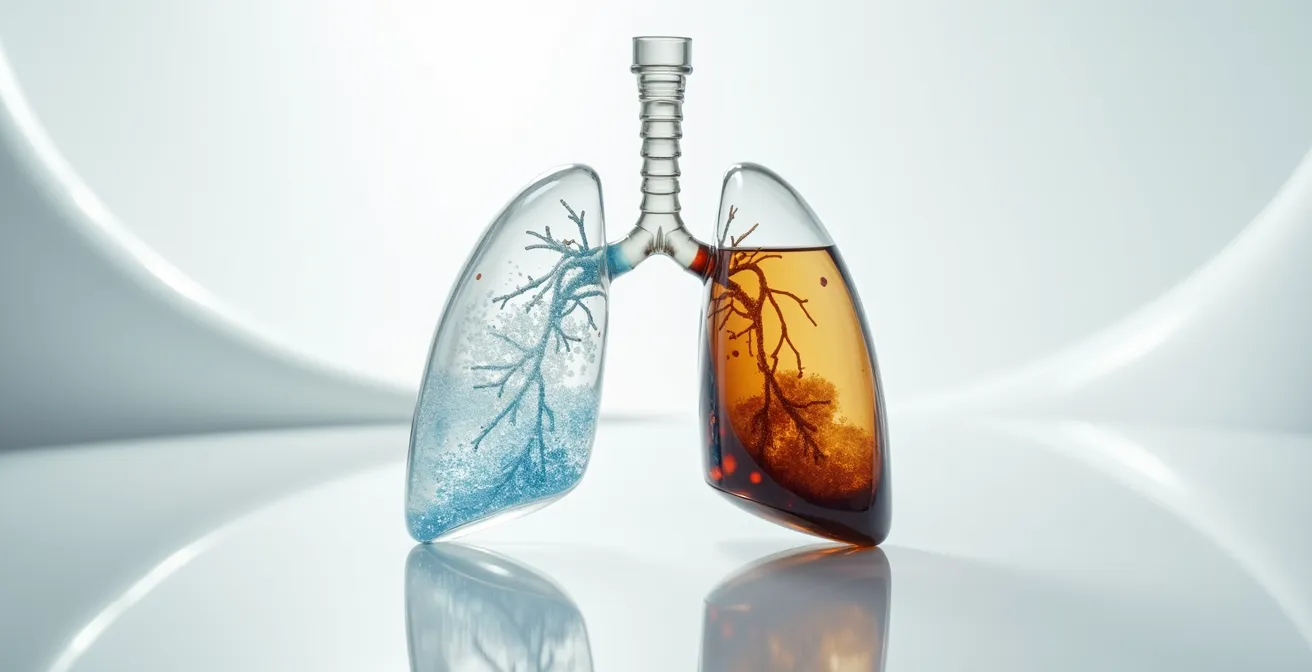
The claim that vaping eliminates tar is scientifically correct; the brown residue in a vape is not tar, but a result of e-liquid caramelization.
- Cigarette tar is a toxic byproduct of combustion, containing thousands of chemicals created by burning tobacco.
- Vaping aerosol is generated by heating a liquid, a process that does not involve combustion and therefore does not produce tar.
Recommendation: Understanding this chemical distinction is the first step. The next is to learn how to manage your device and liquids to minimize the formation of any unwanted thermal degradation byproducts.
The question of whether vaping eliminates or merely reduces tar is a common point of confusion, often rooted in a simple observation: the dark, sticky residue that builds up inside a vaping device. To a smoker, this gunk looks unsettlingly familiar, evoking images of the tar-stained filters of cigarettes. This leads to the skeptical conclusion that “smoke is smoke,” and that vaping is just another delivery system for the same harmful substances. This assumption, while understandable, is based on a fundamental misunderstanding of the chemistry involved.
The core of the issue lies not in the appearance of the residue, but in its origin. Cigarette smoke is the result of combustion—the act of burning tobacco at extremely high temperatures. This process creates a complex and deadly cocktail of thousands of chemicals, including tar. Vaping, on the other hand, operates on the principle of vaporization. It heats a liquid to a temperature sufficient to create an aerosol, but well below the point of combustion. This distinction is not a minor detail; it is the entire basis for the harm reduction potential of e-cigarettes.
But if this is true, what is that brown residue, and does vapor “coat” the lungs in a similar way to tar? The answer requires moving beyond surface-level observations and into the science of what you are actually inhaling. This article will dissect the chemical differences between combustion and vaporization, debunk the persistent “sticky lung” myth, and provide a fact-based framework for understanding what is truly eliminated when you switch from smoking to vaping.
To navigate this complex topic, we will break down the science into clear, understandable parts. The following sections will guide you through the evidence, explaining the origin of vape residue, its effects on the body, and the practical steps you can take to ensure you are using these devices as safely as possible.
Summary: The Chemical Reality of Vaping vs. Smoking
- If It’s Not Tar, What Is That Brown Residue in My Device?
- The “Sticky Lung” Myth: Does Vapor Coat Your Lungs?
- Checking E-Liquid Ingredients: How to Spot Red Flags?
- The Fatal Error of Vaping Oils: What You Must Avoid
- Cleaning Your Tank Weekly to Prevent Buildup
- The 7000 Chemicals: What Exactly Is Eliminated by Switching?
- The Filter Myth: Why Orange Filters Don’t Block Combustion Toxins?
- Adjusting Airflow to Replicate the Tight Draw of a Cigarette
If It’s Not Tar, What Is That Brown Residue in My Device?
The assertion that vapes eliminate tar is not a marketing claim; it’s a statement of chemical fact. Tar is, by definition, a product of combustion. It is the particulate matter left over after organic material, like tobacco, is burned. Vaping devices do not burn anything; they heat a liquid. Therefore, they cannot produce tar. The confusion arises because the residue found in vapes—often called “gunk”—is visually similar to the tar that stains a smoker’s fingers and teeth. However, its chemical composition is entirely different.
This brown substance is primarily the result of e-liquid caramelization. E-liquids contain flavorings and sweeteners, which are essentially forms of sugar. When the coil in your device repeatedly heats this liquid, these sugars undergo a process similar to what happens in a cooking pan: they darken and thicken. The color and amount of residue depend heavily on the specific flavorings and sweetener levels in your e-liquid. Darker liquids like coffee, chocolate, or dessert flavors are notorious for causing buildup faster than clear, simple fruit flavors.
This is a critical distinction. While caramelized sugar is not something you want to inhale in large quantities, it is fundamentally different from the carcinogenic mixture that constitutes tobacco tar. As public health bodies have confirmed, the most dangerous components of cigarette smoke are absent in vape aerosol. According to the UK’s National Health Service, most harmful chemicals including tar and carbon monoxide are not contained in vape aerosol. This confirms that what you see in your tank is a byproduct of heating, not burning.
The “Sticky Lung” Myth: Does Vapor Coat Your Lungs?
The fear that vaping aerosol creates a “sticky coating” on the lungs, much like tar, is a powerful and persistent myth. This imagery is effective because it taps into the known reality of “smoker’s lung,” where tar paralyzes and destroys the cilia—tiny hair-like structures responsible for clearing mucus and debris. The skeptic’s logic follows: if there’s a sticky residue in the device, a similar residue must be coating the lungs. However, this ignores the biology of the respiratory system and the physical properties of the aerosol.
The primary carriers in e-liquid, Propylene Glycol (PG) and Vegetable Glycerin (VG), are water-soluble. This means that once the aerosol is inhaled, your body can absorb and process it through the same mechanisms it uses for water vapor. The lungs are extremely efficient at clearing foreign material via a process called mucociliary clearance. The cilia continuously beat in a coordinated wave, moving a layer of mucus upwards and out of the respiratory tract, carrying trapped particles with it. While particulate matter like tar physically smothers and disables this system, the water-soluble nature of vape aerosol means it does not accumulate in the same way.

This is not to say vaping has zero effect. Scientific research is ongoing, and some studies indicate potential impacts. For instance, recent research shows that e-cigarette exposure reduces ciliary beat frequency, which could impair the lungs’ clearing efficiency over time. However, this is a functional impairment, not a physical coating of sticky tar. The mechanism is different, and the effect is considered significantly less severe than the near-total shutdown of the clearance system caused by inhaling the particulate matter in tobacco smoke.
Checking E-Liquid Ingredients: How to Spot Red Flags?
Since the composition of the aerosol you inhale is determined entirely by the e-liquid, understanding its ingredients is paramount for harm reduction. The absence of combustion means you avoid thousands of toxins, but this advantage is only maintained if the e-liquid itself is free from known harmful substances. A reputable, regulated market is the consumer’s best defense against unnecessary risk. Skeptics are right to be cautious, as not all e-liquids are created equal, and the unregulated market can be a minefield of dangerous additives.
The most infamous example is diacetyl, a flavoring chemical linked to a rare lung disease called “popcorn lung” (bronchiolitis obliterans). While this chemical is present in much higher quantities in cigarette smoke, its presence in early e-liquids caused significant concern. In response, many jurisdictions have banned it as an e-liquid ingredient. As the NHS points out, this is a key differentiator in regulated markets:
Diacetyl is contained in cigarette smoke, but it is banned as an ingredient in UK-regulated nicotine vapes and e-liquids
– NHS Better Health, NHS Vaping Myths and Facts Guide
Beyond specific chemicals, the biggest red flag is the presence of oils. E-liquids should only be based on Propylene Glycol (PG) and Vegetable Glycerin (VG). Any product containing oil-based carriers is not intended for inhalation and poses a severe health risk. To protect yourself, it’s essential to buy from reputable vendors who provide clear and complete ingredient lists and can verify their products comply with local regulations.
Your Checklist for Safer E-Liquid Selection
- Verify the Base: Ensure the ingredients list only Propylene Glycol (PG) and Vegetable Glycerin (VG) as carriers. Immediately reject any product containing oils.
- Check for Ingredient Transparency: Reputable brands provide detailed listings of all ingredients, including flavorings. Avoid products with vague descriptions like “natural flavors.”
- Confirm Regulatory Compliance: In regions like the UK or EU, check if the product is registered with the relevant health authority (e.g., MHRA). This ensures it has been screened for banned substances like diacetyl.
- Buy from Reputable Sources: Purchase exclusively from specialist vape shops, pharmacies, or official brand websites. Avoid marketplace sellers, social media deals, or unlicensed convenience stores.
- Inspect the Packaging: Look for professional packaging with clear nicotine warnings, batch numbers, and expiry dates. Poorly designed or amateurish packaging is a major red flag.
The Fatal Error of Vaping Oils: What You Must Avoid
The single most catastrophic mistake a user can make is to vape substances not designed for inhalation, specifically oils. This error is not a nuanced risk; it is a direct path to severe, potentially fatal, lung injury. The 2019 outbreak of EVALI (E-cigarette or Vaping Use-Associated Lung Injury) in the United States serves as a stark and tragic lesson. The crisis was overwhelmingly linked to the vaping of illicit THC cartridges that had been cut with Vitamin E acetate, an oil-based thickening agent.
When inhaled, oils are not processed by the lungs in the same way as the water-soluble PG and VG bases. Instead of being absorbed and cleared, oil droplets can coat the alveoli (the tiny air sacs in the lungs), triggering a severe inflammatory response known as lipoid pneumonia. This is a purely mechanical and chemical injury; the lungs are simply not equipped to handle a coating of oil. The symptoms are severe and can include shortness of breath, fever, and acute respiratory distress, often requiring hospitalization.
The distinction between standard e-liquids and oils cannot be overstated. Standard, regulated e-liquids use PG and VG as their delivery vehicle. These are alcohols (specifically, polyols) that are water-soluble and have a long history of use in food, cosmetics, and pharmaceuticals. While their long-term inhalation effects are still under investigation, as noted in studies on their aerosol effects, their fundamental properties are well-understood. For instance, research investigating the effects of PG/VG aerosols on airway function is focused on inflammatory responses, a vastly different area of concern than the acute physical injury caused by oils.
The takeaway for any user is absolute: never vape any liquid that is not specifically manufactured for this purpose by a reputable company. Never add oils, supplements, or any other substance to your e-liquid. The “smoke is smoke” fallacy is dangerous, but the “vapor is vapor” fallacy can be deadly.
Cleaning Your Tank Weekly to Prevent Buildup
While the brown residue in your tank isn’t tar, ignoring it is a mistake. This caramelized gunk does more than just look unpleasant; it can negatively impact your vaping experience and potentially introduce unwanted compounds. As the residue builds up on the coil and in the tank, it can degrade further with each heating cycle. This can lead to a burnt, unpleasant taste and, more importantly, the potential formation of aldehydes like formaldehyde, which are known carcinogens. Regular cleaning is therefore a crucial harm reduction practice.
A clean device ensures that you are only vaporizing fresh e-liquid, not the remnants of old, over-heated residue. This not only provides a better flavor but also minimizes your exposure to thermal degradation byproducts. A weekly cleaning routine is a simple and effective way to maintain your device’s performance and safety. The process is straightforward and requires only warm water and a few minutes of your time.
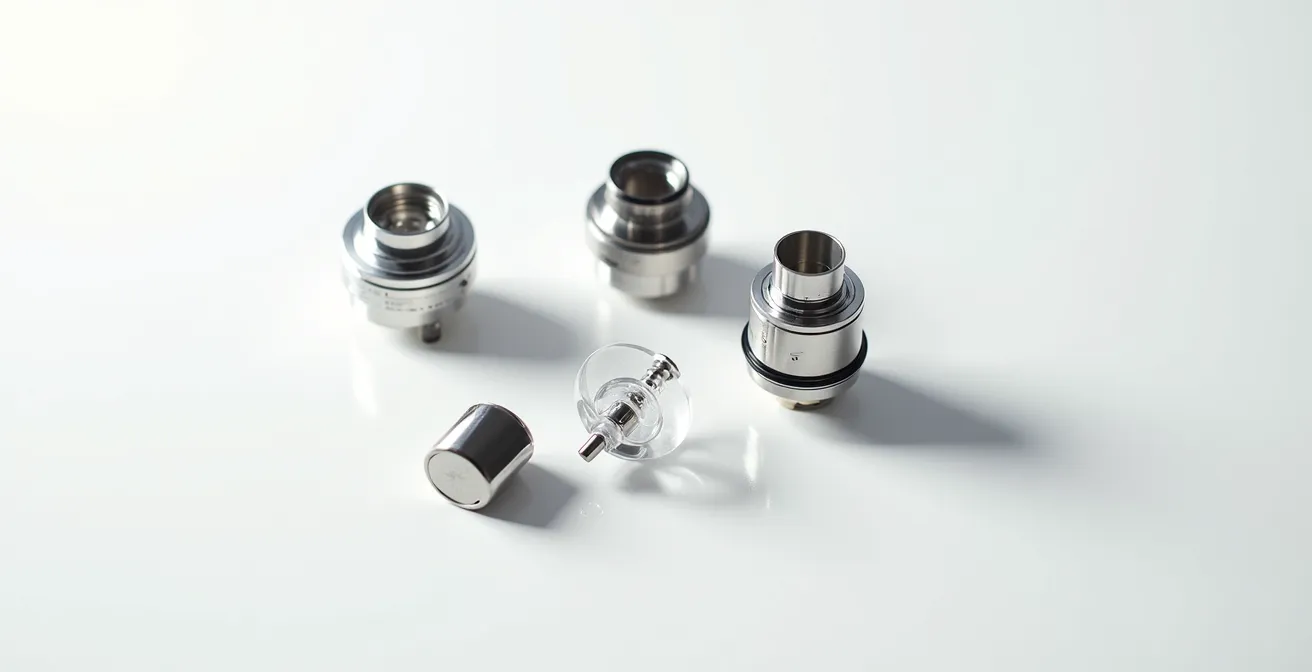
Proper maintenance also involves knowing when to replace your coil. Over time, the coil itself becomes caked with caramelized residue that cannot be fully cleaned. Continuing to use a burnt-out coil is the primary source of harsh, bad-tasting vapor and a sign that you are likely inhaling more unwanted byproducts. A fresh coil is a clean slate.
- Complete Disassembly: Take your tank apart completely, separating the base, glass, top cap, and mouthpiece. Remove the coil.
- Warm Water Rinse: Rinse all components (except the coil) under warm running water. Use a small brush or cotton swab to gently remove any stubborn residue.
- Soak if Necessary: For deep cleaning, you can soak the components in warm water or use an ultrasonic cleaner for a more thorough removal of buildup.
- Dry Thoroughly: Allow all parts to air dry completely before reassembling to prevent any water from mixing with your e-liquid.
- Replace Coils Regularly: Do not try to clean and reuse old coils indefinitely. Replace your coil as soon as you notice a decline in flavor or a burnt taste, typically every 1-2 weeks depending on usage.
The 7000 Chemicals: What Exactly Is Eliminated by Switching?
The primary harm from smoking comes from the massive number of toxic chemicals produced during combustion. When a cigarette is lit, it becomes a chemical factory, creating a deadly mix of over 7,000 chemicals, of which hundreds are toxic and at least 70 are known to cause cancer. Switching to vaping eliminates your exposure to the vast majority of these combustion-related toxicants. The central principle of harm reduction is to move away from this uncontrolled chemical inferno to a much simpler, more controlled aerosol.
The list of chemicals you avoid is extensive. It includes not just tar but also carbon monoxide, a poisonous gas that robs your blood of oxygen, putting immense strain on your heart and cardiovascular system. It also includes arsenic, cyanide, formaldehyde, and a host of other carcinogens that are simply not present in the base ingredients of e-liquid. While vaping aerosol is not harmless and can contain some potentially harmful chemicals (especially when liquids are heated to very high temperatures), the number and concentration of these toxicants are drastically lower than in cigarette smoke.
This is not an opinion but a conclusion supported by multiple health organizations and scientific bodies. The U.S. Centers for Disease Control and Prevention (CDC) notes that e-cigarette aerosol generally contains fewer harmful chemicals than the deadly mix of 7,000 chemicals in smoke from cigarettes. This reduction in exposure is not theoretical; it can be measured directly in the bodies of people who switch. Studies that analyze biomarkers—substances in the blood or urine that indicate exposure to toxins—provide powerful evidence. According to biomarker evidence from Cancer Research UK, people who switch completely from smoking to vaping show significant reductions in their levels of measured toxins and carcinogens.
The Filter Myth: Why Orange Filters Don’t Block Combustion Toxins?
Many smokers believe that the cigarette filter provides a significant layer of protection, trapping the most harmful elements of smoke. The visual evidence of the filter turning dark orange and brown reinforces this belief, suggesting it’s catching the tar before it reaches the lungs. This is a dangerous misconception. While filters do trap some of the largest tar particles, they are largely ineffective at removing the most dangerous components of smoke, including fine particulate matter, toxic gases, and the vast majority of carcinogens.
The primary function of a modern cigarette filter is not safety but sensory manipulation. The cellulose acetate fibers are designed to cool the smoke and make it feel smoother and less harsh to inhale, making a fundamentally toxic product more palatable. Furthermore, ventilation holes in the filter dilute the smoke with air, which lowers the machine-measured yield of tar and nicotine but often causes smokers to compensate by inhaling more deeply or taking more puffs. The filter is a marketing tool that creates an illusion of safety, not a meaningful safety device.
The real “filter” in harm reduction is the complete elimination of combustion. By not burning tobacco, you avoid creating the thousands of harmful chemicals in the first place. For vapers, the equivalent of a “filter” is not a physical barrier but rather user-controlled settings that prevent the e-liquid from overheating. Using temperature control and appropriate power settings is the most effective way to minimize the formation of thermal degradation byproducts like aldehydes.
- Use Temperature Control (TC) Mode: If your device supports it, TC mode allows you to set a maximum temperature for your coil, preventing it from overheating and “dry burning” the wick.
- Set Wattage Appropriately: If using wattage mode, start at the lower end of the recommended power range for your coil and increase gradually until you find a satisfying vape. Pushing too much power through a coil is a primary cause of degradation.
- Monitor Vapor Temperature: If the vapor feels uncomfortably hot, it’s a clear sign your power setting is too high. Reduce it immediately.
- Ensure Proper Airflow: Keep your device’s airflow open enough to cool the coil. Overly restricted airflow can cause heat to build up, leading to a burnt taste.
- Replace Coils Proactively: Change your coil before it tastes burnt. That burnt taste is a warning sign that you are inhaling aldehydes from a scorched cotton wick.
Key Takeaways
- The brown residue in a vape is not tar; it’s the result of e-liquid caramelization, chemically distinct from the combustion-based toxins in cigarettes.
- The primary danger in smoking is combustion itself. Vaping avoids this, eliminating the vast majority of the 7,000+ chemicals found in tobacco smoke.
- User control is the cornerstone of vaping harm reduction. Choosing regulated, oil-free liquids, cleaning your device, and using proper power settings are non-negotiable safety practices.
Adjusting Airflow to Replicate the Tight Draw of a Cigarette
For many smokers transitioning to vaping, replicating the physical sensation of smoking is just as important as replacing the nicotine. One of the most critical factors in this experience is the “draw”—the feeling of resistance when you inhale. Cigarettes have a tight, restrictive draw. Many early vaping devices had a very airy, loose draw, which felt unsatisfying and alien to smokers. Modern devices offer adjustable airflow, allowing users to customize this resistance, a feature that is crucial for a successful switch.
This is typically achieved by choosing a device designed for Mouth-to-Lung (MTL) vaping. This is the same inhalation style used for cigarettes: you draw the vapor into your mouth first, then inhale it into your lungs. MTL devices use smaller coils, operate at lower power, and have restricted airflow settings to create that familiar tight draw. This contrasts with Direct-to-Lung (DTL) vaping, which involves inhaling a large volume of vapor directly into the lungs and is characterized by massive airflow and high power.
Beyond replicating the physical sensation, adjusting for a tighter draw has implications for harm reduction. The lower power and temperature inherent in MTL vaping are less likely to cause thermal degradation of the e-liquid. By heating the liquid more gently, you are creating an aerosol closer to the ideal, with fewer unwanted byproducts. A tight, cigarette-like draw is therefore not just a matter of comfort; it aligns with a lower-intensity, potentially lower-risk style of vaping. Finding the right balance of airflow and power allows a user to get a satisfying experience without pushing the device to its limits.
The scientific evidence is clear: vaping eliminates tar because it eliminates combustion. The journey to effective harm reduction requires moving past visual similarities and understanding the fundamental chemical differences. By arming yourself with accurate information and taking control of your device and consumables, you can ensure that your switch from smoking is built on a foundation of science, not myth.